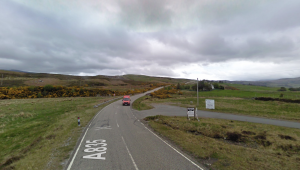
In July 1986, Daniel Joliffe and his wife were driving on the scenic Ullapool to Lochinver road.
As they neared a junction, Daniel intended to turn right. Just as he began his turn, another car, driven by Colin Hay, tried to overtake Daniel’s car and struck it from behind. Tragically, Daniel’s wife, who was sitting in the passenger seat, was killed in the collision. Daniel himself suffered severe injuries, including a fractured sternum and fractured vertebrae.
This tragic accident led to a court case, Joliffe v Hay, which delved into who was responsible for the crash.
The court had to decide whether Colin, the driver behind, had failed to keep a proper lookout and driven recklessly, causing the accident, or if Daniel, the driver in front, had been partly to blame for not paying enough attention to the vehicle behind him before turning.
After careful consideration, the court found that the majority of the blame lay with Colin. They determined that he should have anticipated Daniel’s right turn and adjusted his speed and road positioning accordingly.
Colin was held 70% responsible for the accident.
However, the court also found that Daniel was not entirely blameless. He had not ensured that Colin’s vehicle was reacting to his signal and had not maintained proper observation of what was going on behind him. Therefore, Daniel was found 30% responsible.
This case highlights the responsibilities that both leading and following drivers have on the road and how liability can be shared when both parties are at fault.
Related Articles
MW v Wilkinson – Driver not liable in child pedestrian accident
A tragic road traffic accident involving a 5-year-old boy resulted in serious injuries, but the court found the driver was not liable. This case highlights when drivers may – and
Atkinson v Kennedy – Driver not liable in child pedestrian case
Atkinson v Kennedy demonstrates that even in serious child pedestrian accidents, liability is not automatic. The Court held the collision was unavoidable despite the driver exceeding the speed limit.
Gadsby v Hayes | Child pedestrian toucan crossing case
A High Court case examining whether a driver should reduce speed to 10 mph at a toucan crossing. Despite serious injuries to a child pedestrian, the court found no negligence.
Is it worth 5 minutes of your time?
A quick phone call allows us to ask you a few questions about what happened to you and determine whether we can help.
This form collects your name and phone number so that we can contact you. Check out our Privacy Policy for more detail on how we store, process and protect your submitted data. If you choose not to consent, please use an alternative contact method shown on our Contact page.