When things go wrong, how is liability shared in motorcycle collisions?
Road traffic collisions are rarely as straightforward as one party being entirely to blame. Often, both parties in a collision contribute to some extent. The challenge is determining whose actions were more blameworthy or negligent in causing the collision.
The following case is an example.
In October 2025, our client was riding his motorcycle westbound on Whitecraigs Road in Glenrothes. It was early evening, the weather was dry, visibility was good and the road is subject to a 30mph speed limit.
The collision was captured on CCTV.
Watching the footage, many viewers will immediately form an opinion about who was at fault. However, liability in road traffic claims is rarely determined by first impressions alone
The rider's mistake
Our client accepted from the outset that he was travelling above the speed limit and believing the vehicle ahead was pulling to the left to park, he executed an overtake at the entrance to an industrial site, a junction.
Rule 167 of the Highway Code advises drivers and riders not to overtake where they may come into conflict with other road users, specifically including situations when approaching or passing a junction.
Our client's speed and decision to overtake in these circumstances was therefore an important factor in the collision.
The driver's responsibilities
The CCTV also showed the driver commencing a right turn across the path of the motorcycle without properly ensuring that it was safe to do so.
Rule 179 states that before turning right you should use your mirrors to make sure you know the position and movement of traffic behind you, give a right-turn signal and take up a position just left of the middle of the road to leave room for vehicles to pass on the left.
Rule 211 of the Highway Code specifically reminds drivers to be particularly aware of motorcyclists and to look carefully before turning, changing direction or altering their position on the road.
The footage reveals the driver did not adequately check for movement of traffic behind before planning the right turn.
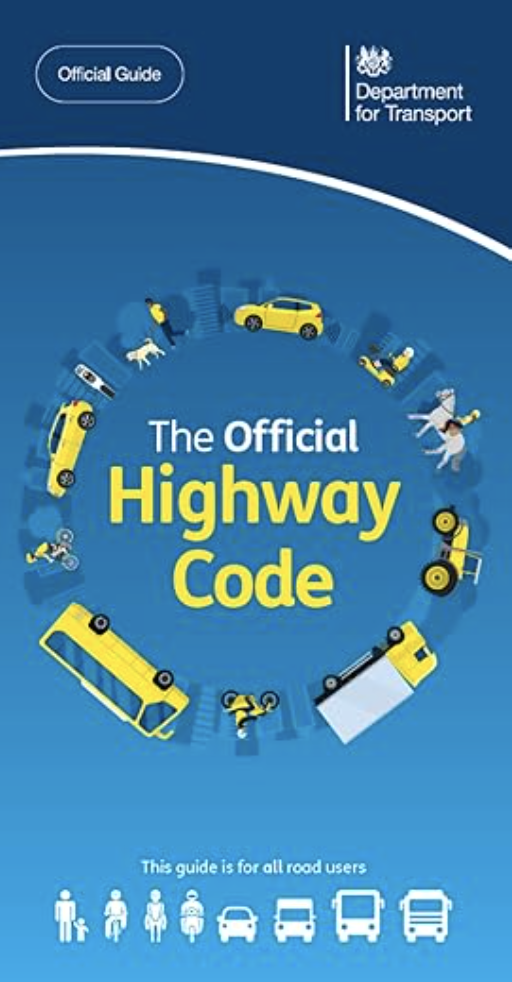
Why the Highway Code matters
The 2022 changes to the Highway Code introduced the concept of the Hierarchy of Road Users.
Rule H1 recognises that those in charge of vehicles capable of causing the greatest harm have the greatest responsibility to reduce danger to others. Motorcyclists are specifically recognised as vulnerable road users because they have little physical protection in a collision.
Rule 204 reinforces this principle by reminding drivers that motorcyclists are among those most likely to suffer serious injury and that motorists should take particular care around them.
These rules do not give motorcyclists priority or excuse poor riding. Rather, they impose a greater duty on drivers to ensure that manoeuvres such as turning right are carried out safely.
What the courts say
These principles are reflected in the Court of Appeal decision in Hernandez v Acar, a case involving a collision between a motorcyclist travelling at 50 mph in a 30 mph zone and a driver pulling out from a junction to the motorcyclist’s left.
The Court confirmed that both parties contributed to the collision and were equally blameworthy. However, where blameworthiness is shared, the balance shifts in favour of the more vulnerable, in this case, the motorcyclist. The result, motorcyclist 40% to blame, driver 60% to blame.
You can read more about that important decision here :
Our case demonstrates that liability is determined by identifying
- the relative blameworthiness of each road user and
- the causative potency of their actions. In other words, the ability to cause harm.
The outcome
Our client suffered a serious ankle fracture.
The driver's insurers initially disputed liability entirely.
After careful analysis of the Highway Code and the applicable case law, we argued that the driver should bear the greater responsibility.
The claim ultimately settled based on split liability, with responsibility weighted in favour of the injured motorcyclist.
Lessons for every road user
This case contains valuable lessons for both riders and drivers.
We can all make errors of judgement and there can be serious consequences, particularly for motorcyclists. Speed does not necessarily mean sole fault. It’s only one factor to be taken into consideration when assessing liability or negligence.
For motorcyclists:
- Never assume a vehicle is pulling over simply because it moves left.
- Do not overtake at or near a junction.
For drivers:
- A right turn is a risky manoeuvre on the road and it’s important to check for both oncoming and following traffic.
- Mirror, signal, manoeuvre.
- Look out for vulnerable road users.

Specialist representation matters
Cases like this demonstrate why motorcycle claims require specialist knowledge.
Liability is often far more complex than first appears, particularly where both parties have made mistakes. Understanding the Highway Code, the latest case law and how the courts assess contributory negligence can make a significant difference to the outcome.
At Motorcycle Law Scotland, every member of our legal team is an advanced rider or advanced driver. We understand the realities of motorcycling, know how courts assess such cases and work hard to ensure that liability decisions properly reflect the responsibilities of parties to a collision.
Our Award Winning Team

Brenda Mitchell
Senior Partner
Brenda has been a Personal Injury Lawyer for over 38 years and for the last 20 years has specialised representing injured motorcyclists, cyclists and pedestrians.

Jodi Gordon
Partner
Jodi is a Partner at RTA Law LLP with 14+ years’ experience in catastrophic injury claims for vulnerable road users including cyclists and motorcyclists.

Thomas Mitchell
Partner
Thomas represents clients who have been involved in road traffic incidents and he specialises in representing vulnerable road users such as pedestrians, cyclists and motorcyclists.
Our Recent Case Studies

Van reverses into motorcyclist
Van reverses into motorcyclist at traffic lights and the driver apologises. However, the following day, he denies the incident occurred and instead blames the motorcyclist for riding into the back

‘Fatting up’ causes motorcycle to crash
Fatting-up of the road surface can cause a loss of friction which can affect a motorcycle, especially on a bend.

Rebuilding a shattered life
As is so often the case, even though it was clear that Barry was not at fault, the driver’s insurers would not admit liability.

Motorcyclist wins court battle after Edinburgh bypass crash
Matthew suffered injuries and financial losses after a collision on the Edinburgh bypass when a driver suddenly changed lanes into his path. Despite the insurer denying liability, Motorcycle Law Scotland
Is it worth 5 minutes of your time?
A quick phone call allows us to ask you a few questions about what happened to you and determine whether we can help.
This form collects your name and phone number so that we can contact you. Check out our Privacy Policy for more detail on how we store, process and protect your submitted data. If you choose not to consent, please use an alternative contact method shown on our Contact page.