
Collision locus and circumstances.
Francis was out for an run on his Suzuki GSXR 750cc motorcycle on a warm summer's evening in June. He was heading south down the B743 from Strathaven to Muirkirk.
Approaching Muirkirk, he reduced his speed, prepared to take a sweeping right-hand bend and correctly positioned himself to the left side (position 1) of his lane. As he exited the corner, he gently opened up the throttle but his back wheel lost all traction and spun round to the right. His motorcycle broad-sided before the rear wheel re-gripped throwing Francis off.
Francis tumbled down the road landing hard before rolling onto his right arm and eventually his side. With adrenaline flowing, he was able to get to his feet to see his motorcycle lying on the opposite carriageway. He safely moved the motorcycle to a nearby lay-by and phoned the emergency services.
Francis was taken by ambulance to Ayr Hospital where he was treated for multiple fractures to his right wrist. He then attended Glasgow Royal Infirmary where he underwent surgery and metalwork fixation on the injured area. Physiotherapy then provided some relief, but Francis continued to suffer from his injuries.
His wrist pain persisted and this affected his employment and sporting interests. He was unable to play golf or football for fear of causing further damage. Fortunately, he was eventually able to return to riding motorcycles although with a degree of pain especially on longer rides.

The defect and responsibility
When the police arrived at the scene, Francis told them about the road defect. They went to check the road and, in their view, deemed it to be “alright”! This was far from the case. We intimated a claim to the Local Authority on the basis the defect was an obvious hazard to road users and especially motorcyclists. The Local Roads Authority were quick to deny liability. They stated the defect had developed in between inspections of the road and, as they had a reasonable system of maintenance and inspection, they had not breached their duty of reasonable care to road users. In response, we instructed an expert civil engineer to comment on the state of the road and the likelihood of the defect’s existence prior to the accident.
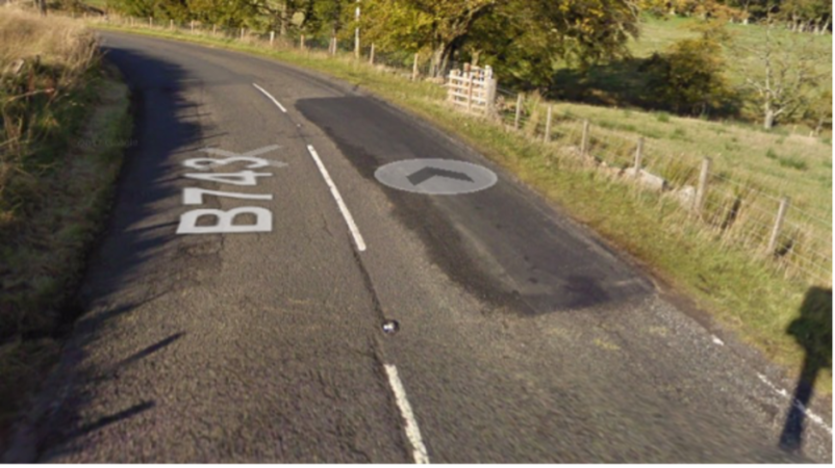
The expert's opinion was that the defect was the result of “fatting up” whereby bitumen from resurfacing had risen up and formed an excess layer on the road surface. On days when the temperature is hot, such on the day of Francis’ accident, the resurfacing would have softened and offered significantly reduced skid resistance.
We were able to uncover that the road in question had been inspected monthly yet the “fatting up” had remained unnoticed by the Local Authority despite being glaringly obvious as the photo shows.
More alarmingly, it was also uncovered that a complaint had been made to the Local Authority with regards to the defect well before Francis’s incident, yet the response to that complaint following inspection had been that it was simply a stripping of the road surface which required no further action!
Getting the right result.
Despite the expert opinion and convincing evidence against the local authority including the prior complaint, liability was again denied.
In response to that, we raised an action in Court for Francis to ensure that he would be correctly compensated for the Local Authority’s negligence. Solicitors representing the Local Authority remained steadfast and had also carried out their own investigations.
They obtained statements from another Local Authority Roads Inspector who, upon being shown photographs of the defect, stated “I would agree that there are no obvious defects which would require any intervention.” The legal test which we are required to satisfy is “would a reasonably competent Roads Inspector deem the defect in need of repair prior to the accident and should those repairs have been executed?"
Satisfied we were in a strong position, we pushed on. Surely the ‘fatting up’ was an obvious hazard that should have been removed prior to the Francis's crash, particularly given the guilty knowledge by way of a prior complaint.
How could a reasonably competent Roads Inspector not consider the fatting up to be worthy of repair? Fatting up may not be a hazard to four wheeled users, but it is most certainly a hazard to those on two wheels.
Faced with our determination to see this case all the way through to a full Court Hearing, the defenders reassessed their prospects of success and offered Francis a substantial sum in damages. We advised Francis to accept the offer and his case was successfully concluded.
Throughout the entirety of this case, we adopted a resilient approach to carrying out our detailed investigations. Despite being told continuously that the Local Authority was not at fault, we would not accept this position and continued to provide Francis with the full support to push on with a Court Action funded by us.
There was no risk to Francis as if we had been unsuccessful, he would have ‘walked away’ with no liability for any court costs. Our position is always that if we consider there to be a 50% prospect of success, we will provide full funding for a legal action at our risk and expense, not the client’s.
Road surface defect cases are not easy but we were quick to identify the cause of this particular defect and the negligence on part of the Local Authority. 'Fatting up' is dangerous to motorcyclists and thankfully the road has now been suitably repaired.
Our Award Winning Team

Brenda Mitchell
Senior Partner
Brenda has been a Personal Injury Lawyer for over 38 years and for the last 20 years has specialised representing injured motorcyclists, cyclists and pedestrians.

Jodi Gordon
Partner
Jodi is a Partner at RTA Law LLP with 14+ years’ experience in catastrophic injury claims for vulnerable road users including cyclists and motorcyclists.

Thomas Mitchell
Partner
Thomas represents clients who have been involved in road traffic incidents and he specialises in representing vulnerable road users such as pedestrians, cyclists and motorcyclists.
Our Recent Case Studies

Rebuilding a shattered life
As is so often the case, even though it was clear that Barry was not at fault, the driver’s insurers would not admit liability.

Classic SMIDSY at Junction
A car pulls straight out in front of Richard at a junction just north of Jedburgh.

Another SMIDSY victim
A car suddenly turned straight across Jamie's path as he was riding slowly through Thurso town centre.

Navigating Twists and Turns: Dave’s Quest for Justice
Even straightforward cases can have many twists and turns but Motorcycle Law Scotland will always stand by you and provide clear advice.
Is it worth 5 minutes of your time?
A quick phone call allows us to ask you a few questions about what happened to you and determine whether we can help.
This form collects your name and phone number so that we can contact you. Check out our Privacy Policy for more detail on how we store, process and protect your submitted data. If you choose not to consent, please use an alternative contact method shown on our Contact page.