
Chris collided with the driver's door
In January, Chris was cycling home from work. This was a journey he had travelled over 100 times. He knew the route and was well equipped for the dark evenings wearing a high visibility jacket and lights. Chris’s journey home took him across Crowwood roundabout, Stepps. On this particular evening, he was established on the roundabout when a car driver failed to give way and pulled out into his path. As a result, Chris collided with the driver’s door and sustained injury.
This seemed to be a straightforward case on liability, but from the outset, the driver’s insurers denied responsibility. Bizarrely, the driver stated that he had observed Chris on the roundabout, but that he thought he was far enough away to allow him to enter the roundabout safely. The driver claimed that he was half way round the roundabout when the collision occurred. It was agreed that the point of collision was the driver’s door.

Case raised in Sheriff Court
We often see cases where drivers fail to observe cyclists on roundabouts or at junctions, but that was not the case here. The driver was admitting he had seen Chris established on the roundabout.
For this scenario to be true, Chris would have had to have gained distance on the motor vehicle, drawn level with it and then turned into its path, all whilst missing his planned exit!!
The case was swiftly raised in Airdrie Sheriff Court. In Civil cases, we are required to prove our case on balance of probabilities. So, which scenario was more probable?
1. The driver had failed to consider Chris’s speed and pulled out into his path?
2. Chris had accelerated onto the roundabout, drawn level with the car, missed his junction and then turned into the side of the vehicle, causing the collision?

Chris awarded damages
Liability remained disputed throughout the process and the case went all the way to a Court hearing on 15th March, 14 months after the collision.
Given the ongoing pandemic, all evidence was heard via video link. The driver’s wife had been in the vehicle at the time and therefore gave evidence corroborating her husband’s version of events.
In our submission to the Court, we made our position clear that the Defender’s version of events was entirely improbable. The evidence from the driver and his wife had been rehearsed and the Pursuer, Chris, ought to be believed.
The Sheriff agreed and found in favour of Chris, awarding him damages for the injuries he had sustained.

We take the time to get to know our clients
Chris was a regular cyclist who took every precaution to avoid collisions and conflicts on the road. Crucially, he knew his route and the Defenders could provide no basis as to why Chris would have missed his intended junction and collided with the vehicle in the manner they were stating.
It is only through taking the time to get to know our clients and take detailed statements, that we can best present their case in Court. We were able to paint the picture to the Court of a careful road user who understood his vulnerabilities as a cyclist and did not take unnecessary risks. The driver, on the other hand, refused to acknowledge that cyclists were vulnerable road users and should be provided extra care.
Our Award Winning Team

Brenda Mitchell
Senior Partner
Brenda has been a Personal Injury Lawyer for over 38 years and for the last 20 years has specialised representing injured motorcyclists, cyclists and pedestrians.

Jodi Gordon
Partner
Jodi is a Partner at RTA Law LLP with 14+ years’ experience in catastrophic injury claims for vulnerable road users including cyclists and motorcyclists.

Thomas Mitchell
Partner
Thomas represents clients who have been involved in road traffic incidents and he specialises in representing vulnerable road users such as pedestrians, cyclists and motorcyclists.
Our Recent Case Studies
Pothole case Glasgow
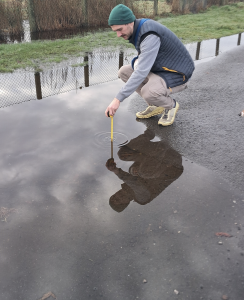
An experienced cyclist suffered a serious wrist fracture after striking a pothole concealed beneath floodwater on a shared-use path at Hogganfield Loch, Glasgow. Cycle Law Scotland investigated the history of

Cyclist injured by German tourist on Scottish cycle path
Colin was cycling on National Cycle Route 75 when he was involved in a head-on collision with a German tourist who instinctively rode on the wrong side of the shared-use

Cyclist injured by hidden pothole secures full compensation
A keen cyclist suffered multiple injuries after hitting a pothole concealed beneath standing water near Kilmarnock. Despite attempts to reduce compensation, Cycle Law Scotland successfully secured a full settlement.

Leith Walk tram track cycling accident
Hannah suffered injuries after her bicycle wheel became trapped in tram tracks on Leith Walk in Edinburgh. Cycle Law Scotland investigated and discovered the cycle lane measured just 0.33 metres
Is it worth 5 minutes of your time?
A quick phone call allows us to ask you a few questions about what happened to you and determine whether we can help.
This form collects your name and phone number so that we can contact you. Check out our Privacy Policy for more detail on how we store, process and protect your submitted data. If you choose not to consent, please use an alternative contact method shown on our Contact page.