
A routine journey through Glasgow city centre.
Paul was cycling through Glasgow city centre on an evening journey towards Glasgow Central Station. He was travelling along Renfield Street, approaching the traffic light-controlled junction with St Vincent Street.
Those familiar with Glasgow will know that at most times of the day and night this is a particularly busy part of the city with significant vehicular and pedestrian traffic. The time and date of Paul’s accident were no exception.
Paul was cycling down Renfield Street and planning to turn right onto St Vincent Street at the traffic lights. At this point, the road consists of four lanes of one-way traffic, controlled by phased signals. Paul was an experienced cyclist, wearing high-visibility clothing, a helmet, and using front and rear lights.
As he entered the junction and began his right turn manoeuvre, something struck the rear of his bicycle. He has no clear memory of the collision itself. Paul would later discover that he had been struck by a driver of a car that had run through a red light.

Loss of consciousness and emergency treatment.
The impact caused Paul to lose consciousness. When paramedics attended, he was described as confused and disoriented.
He was taken to hospital where imaging confirmed that, fortunately, there was no brain injury. However, he had sustained a fractured collarbone, significant chest bruising, and a soft tissue injury to his hand.
He was discharged in the early hours of the following morning but required a period off work and ongoing recovery.
At the outset, the circumstances of the collision were unclear. Paul had no recollection of the traffic signals at the time and did not have details of the driver involved.
Police enquiries were ongoing, including efforts to recover CCTV footage from the junction. As is often the case in collisions involving loss of consciousness, the absence of clear recollection made early liability investigations more challenging.
Securing crucial evidence.
We worked closely with the police, initially obtaining the CRaSH report. This provided us with the third-party details and allowed us to intimate a claim against the relevant insurer. We also secured CCTV footage from two separate camera angles covering the junction.
The footage proved to be critical. (It can be viewed here).
One camera showed Paul approaching and proceeding through the junction in a controlled and consistent manner. A second camera captured the collision more clearly, including the movement of surrounding vehicles.
Importantly, the footage demonstrated that Paul was travelling through the junction on a green light. Other vehicles in the same direction continued through the junction in the same manner, while the third-party vehicle entered the junction when it was unsafe to do so.
Although the footage did not clearly show the colour of the traffic lights themselves due to distance, the sequencing of the signals, together with the movement of surrounding traffic on such a busy road, painted a clear and compelling picture. We were therefore satisfied that, on the balance of probabilities, the driver of the car had proceeded through a red light.

Overcoming evidential and procedural challenges
Although officers from Police Scotland reviewed the footage, they considered it insufficient to support a criminal charge. The civil standard of proof, however, is different.
We interviewed the investigating officer and carefully assessed all available evidence. Despite the limitations in the footage, we were satisfied that liability could be established on the part of the car driver.
We proceeded to fully prepare and frontload Paul’s case with all relevant evidence, including CCTV analysis and medical reports.

Complications during recovery
During his recovery, Paul began to suffer from a significant and persistent urological condition linked to the accident.
We instructed a specialist expert to assess this issue and its impact. Given the severity of his symptoms, and the lengthy waiting times for treatment, urgent intervention was required.
To ensure Paul received timely care, we took proactive steps to secure an interim payment for him.
When the third party failed to engage meaningfully, we raised court proceedings at an early stage and utilised procedural mechanisms to apply pressure for the interim payment.
Shortly after lodging a motion for interim damages, the defender agreed to release funds. This allowed Paul the option of proceeding with private treatment without delay, avoiding an approximate 12-month wait within the NHS system.

A successful resolution
The outcome reflected both the strength of the liability evidence and the extent of Paul’s injuries and ongoing complications.
The importance of early investigation and decisive action
This case highlights the critical role that CCTV evidence can play in complex junction collisions, particularly where the injured party has little or no recollection of events.
It also demonstrates the importance of acting quickly to secure evidence, properly analyse liability, and take decisive procedural steps where insurers fail to engage.
Through a combination of detailed investigation and strategic litigation, we were able to achieve a positive outcome and ensure Paul received the treatment and compensation he required.
If you’ve been injured in a cycling incident, contact Cycle Law Scotland for expert advice and support.
Our Award Winning Team

Brenda Mitchell
Senior Partner
Brenda has been a Personal Injury Lawyer for over 38 years and for the last 20 years has specialised representing injured motorcyclists, cyclists and pedestrians.

Jodi Gordon
Partner
Jodi is a Partner at RTA Law LLP with 14+ years’ experience in catastrophic injury claims for vulnerable road users including cyclists and motorcyclists.

Thomas Mitchell
Partner
Thomas represents clients who have been involved in road traffic incidents and he specialises in representing vulnerable road users such as pedestrians, cyclists and motorcyclists.
Our Recent Case Studies
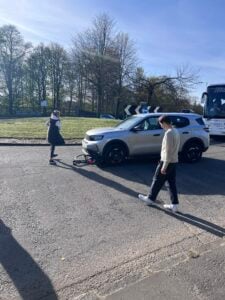
Cyclist injured at Glasgow roundabout wins claim despite insurer denying liability
A Glasgow cyclist suffered a fractured foot and had his brand-new Merida Reacto destroyed when a driver entered a roundabout and collided with him. Despite the driver's apology, her insurer
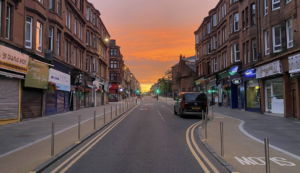
Cyclist hit by untraced driver files MIB compensation claim
A Glasgow cyclist knocked from his e-bike was unable to identify the driver responsible. Cycle Law Scotland pursued his claim through the Motor Insurers’ Bureau, securing rehabilitation and more than
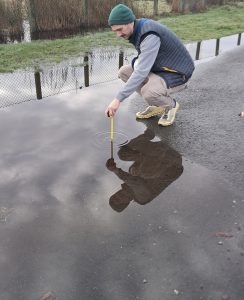
Pothole case Glasgow
An experienced cyclist suffered a serious wrist fracture after striking a pothole concealed beneath floodwater on a shared-use path at Hogganfield Loch, Glasgow. Cycle Law Scotland investigated the history of

Cyclist injured by German tourist on Scottish cycle path
Colin was cycling on National Cycle Route 75 when he was involved in a head-on collision with a German tourist who instinctively rode on the wrong side of the shared-use
Is it worth 5 minutes of your time?
A quick phone call allows us to ask you a few questions about what happened to you and determine whether we can help.
This form collects your name and phone number so that we can contact you. Check out our Privacy Policy for more detail on how we store, process and protect your submitted data. If you choose not to consent, please use an alternative contact method shown on our Contact page.